
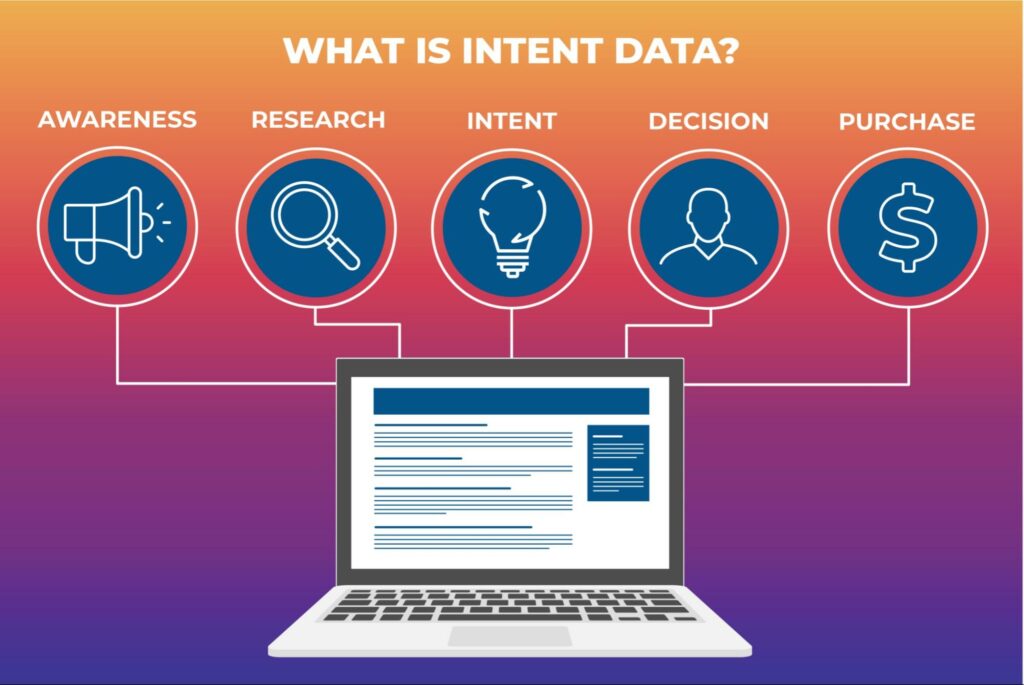
So you want to know about Intent data. Intent data is basically information that shows what people want to do when they’re online. It is like knowing what is on someones mind when they are searching for something on the internet.
Intent data works by tracking what people search for and what websites they visit. This information is very useful because it helps us understand what people are looking for.
To use data you need to collect it first. You can do this by using tools that track what people do online. Then you have to analyze the data to see what it means. For example if a lot of people are searching for data that means they want to learn more about it.
Here are some ways to use data:
- To know what people want to buy
- To understand what people are interested in
- To make decisions about your business
- To know how to advertise to people who are actually interested in what you have to offer
So intent data is very powerful and can really help you understand what people want. By using data you can make your business better and sell more things to people who actually want them. Intent data is, like having a tool that helps you know what people are thinking when they are online.
You can’t answer these questions by reading your customers’ and prospects’ minds, but you can do something nearly as effective: Look at their intent data. Intent data, also known as buyer intent data or purchase intent data) is basic information about a customer’s online behaviour.
Intent data reveals certain online behaviours from your target audience that signal what they’re likely to do next—whether that’s buy a product in your category or leave your company for a competitor.
However, despite its business value, it’s rarely leveraged effectively. For example, when we studied 114 B2B companies’ lead response times, the average time clocked in at 12 hours, while 18% of organizations never responded.
This begs the question: How can you use this type of data quickly and thoughtfully? We’ll breakdown 5 examples that tackle both of these goals. But first, let’s make sure we’re aligned on what we mean by intent data and why it’s critical for growing your business.
Ready to leverage intent data?
You can use Workato to build automations. Workato is a company that helps big businesses automate things. They can help you make tools that help your sales teams do things with the information they get from people who’re interested in what you are selling. Workato is really good at this. They are the best, at helping big businesses automate things.
Schedule a demo
Intent data definition
Intent data refers to market intelligence data that tells you about the online research a lead is conducting. To put this plainly, your lead’s content consumption and behaviour. This data can be obtained from first-party and/or third-party sources.
First-party data simply uses cookies and IP addresses to follow leads on your site. You’ll learn about the pages they view, the whitepapers they download, the webinars they attend, etc., while third-party data monitors your leads’ behaviours across other sites.
But what does this data provide? It often includes everything from the lead/user’s behavioural data, application/social media interaction, website visits, downloads action, interest across the web, and keyword searches.
Since this data is some sort of breadcrumb behavioural data from a user’s digital footprint, it can be used to better understand a user’s buyer intent, gain engagement insights, and tailor personalized interest. Thus, by understanding what your leads are reading, when they’re reading it, and how long it takes, you can begin to sell and market your product more effectively (the following sections explore this further).
Types of Intent data
As mentioned, Intent data can be obtained from first-party and/or third-party sources. Let us briefly explore these types:
First-party intent data
First-party intent data is data collected from your site using cookies and IP addresses to follow your site. One of the perks of first-party intent data is that it is reliable and tailored to your site because it gives you first-hand insight into users who directly interacted with your site. The data, which can come from filled-out forms, customer feedback, or IP addresses, can give you insights into users.
Third-party intent data
Third-party intent data is data collected from external sources—data providers, conglomerates, or publishers—to monitor your lead’s behaviour across other sites. The data mostly gives you insights into competitor activities and user interests, which you can use for opportunities, needs, and innovation.
Sources of 3rd-party intent data
To better understand different forms of intent data, let’s explore some popular 3rd-party platforms that let you gather it:
G2: if you use a website like G2 to review software you can find out what pages people look at. For example G2 can show you if people visit your companys page on G2 or if they look at one of your competitors pages. G2 can even tell you if people are comparing your company to a competitor on G2. This is really helpful because you can see what people are doing on G2 when they are looking at your company and other companies like yours, on G2.
Bombora: this platform is really useful because it can keep an eye on what people’re doing on a bunch of different websites. It can even figure out what the pages are about that people’re looking at and it does this by using something called natural language processing. This means it can give scores to peoples accounts based on the topics they’re interested in like what they are reading about on Bombora. So basically Bombora is good, at tracking what people do on websites and understanding what they like to read about on those sites.
6sense: a tool like 6sense is really useful because it helps you keep an eye on the accounts that look at ads. It also helps you understand what the pages are about that these adsre on. This is done with the help of Natural Language Processing. So 6sense is similar to Bombora in that it can use this information to give scores to accounts based on topics that they seem to be interested in. This means you can use 6sense to get an idea of what people are looking at and what they care about just like you can with 6sense and other tools, like it.
Is intent data safe to use?
Intent data is safe to use only if measures are taken to ensure its safety throughout the process—from collection to storage and analytics.
You, your organization, and your data provider must adhere to data protection regulations to ensure safety. Thus, you must get consent, apply security measures (encryption, access control) to personal information, and be transparent about how you collect the data and plan to use it.
When discussing personal information, it is important to ensure that it doesn’t reflect biases, is anonymized, is audited regularly, and that data handling techniques are implemented.
How to use intent data
Here are just a couple of impactful ways to use intent data:
Share critical intent data with reps in near real-time
Yes, Intent data gives you insights. One way to maximize the impact is by sharing this insight with shareholders in near real-time so they can act swiftly, prioritize efforts, and personalize their interaction with the lead to address their needs.
Doing this can boost your conversion rate and improve customer engagement and revenue.
Keep an eye on the people who bought from you before and get in touch with them when they start a job at a different company. This is a way to stay connected with previous buyers and see if they need anything from you now that they are working somewhere new. You can also find out if they know anyone who might be interested in what you have to offer. Remember to reach out to buyers and see how they are doing because they might need your help again now that they are, in a new role.
When someone transitions into a new role, they’re eager to establish themselves and make a strong impression on their team. This can motivate them to use tools that fueled their success in the past.
Intent data can help re-engage previous leads, especially when they make new career changes and indicate renewed interest in your product. The good thing is that intent data also helps you re-engage at the right time. This way, you can capitalize on the moment to rekindle relationships and upsell or cross-sell opportunities.
An example will be updating contact info in your CRM via data sources like ZoomInfo and triggering alerts to the account manager using Workbot. The account manager can then send personalized messages through a platform like Outreach or even send a gift with a tool like Sendoso.
I want to show you how I do this thing. I will take you through it step, by step so you can understand it better. Let me show you how.
Respond to new leads on time
We recently tackled this approach ourselves. We wanted to accelerate our response time as 77% of leads either heard back when it was too late or didn’t hear back. So, we used intent data.
How? Leveraging intent data comes with the gift of automation. This data, when used, can help one respond swiftly, personalise interaction, and boost conversion rates.
On our end, we responded to qualified lead faster using Lead Bot to route every lead that filled out a form to our sales rep in Slack. Within every message, we also add information on the lead by using ClearBit, ZoomInfo, Linkedin Sales Navigator, and Salesforce.
I want to tell you more about what we have been doing and how it has helped our sales team. The process has been really good, for our sales organization. It has given us some great benefits. Our sales organization has seen some improvements because of this process.
We should let the customer success managers know when one of our clients is looking at what our competitors have to offer. This way the customer success managers can keep an eye on our clients. Make sure they are happy with our services. The customer success managers need to know when a client is viewing our competitors so they can reach out and help the client with any questions or concerns they may have, about our services compared to the competitors.
- Let’s say that one of your customers is browsing through a peer-review site for business software, like G2. They spend time looking at your page, your competitors’ pages, and they even look at the list of the best vendors within your software category.
- Clearly, this customer is reevaluating their relationship with your business. But how do you help your team become aware of this before it’s too late? By sharing the customer’s activity with your team through “Intent Bot”. Here’s how it works:
- So you decide what makes a customer likely to stop doing business with you and then you use that as a signal in Workato. For instance it could be a customer who looks at a competitors page on G2. This is how you figure out which customers are at risk of leaving and then Workato helps you do something about it. You use Workato to automate things when a customer does something that makes you think they might leave, like looking at another companys information, on G2.
- When a customer does what you want them to do the Intent Bot starts gathering information, about this customer from apps that you control, like the customers account in your Salesforce system.
- Then the Intent Bot sends a message to the customer success manager who’s in charge. This message goes through the messaging system that your company uses to talk to each other. The message has details about what the customer did on G2 and what the customer did in the apps that your company made. The Intent Bot makes sure the customer success manager gets this information, about the customer.
- Now your CSMs can identify which of their accounts are at risk of churn. And by using the information provided by Intent Bot, they can provide a personalized response quickly—which should significantly reduce the chances that your customer leaves.
- Combine intent and product usage data to pinpoint expansion opportunities. While intent data, in and of itself, is clearly valuable, it’s utility stretches further when combined with other types of information, such as product usage data.
For example, say an account is adding users who (based on their titles) might be interested in one of your products that don’t fall within their current license. In addition, according to your intent data, contacts at the account are consuming content that’s related to that product.
You can use these insights to trigger an automation where the assigned CSM receives a notification in Slack; within the message, they can not only learn about the new users and the account’s score for a specific content topic(s), but also add the contacts to the appropriate Outreach sequence with the click of a button. In addition, they can access resources for selling that product, giving them all the more confidence in cross-selling to that account.
What are the benefits of intent data?
Here are some of the top benefits it provides:
Identify buyers faster
With this type of data, you can better understand when a lead is sales-ready. This allows you to reach out to them sooner—which makes a world of a difference on your close rate. Interestingly, a survey by Bombora with Ascend2 revealed that 56% of respondents primarily utilize buyer intent data to identify new target accounts.
However, as we proved earlier, having it on-hand doesn’t guarantee a timely reaction. Later in this page, we’ll show you how you can use it to ensure that your team responds quickly.
Personalize your outreach
Intent data also allows you to understand what, exactly, the lead is looking for. Were they viewing a specific product page in your site? That’s a clear sign that they’re interested in that product. Were they reviewing your competitor’s page in a software review site? They may be seriously considering them over you.
The more you understand your intent data for each lead or client, the better you can respond. And a better response not only gives you a higher chance of getting your message viewed, but it also increases the chances that you deliver on your desired outcome—such as retaining the client or selling them another product.
One use case will be using Intent data to enhance sales and marketing areas, from ad copy to landing pages and sales outreach subject lines. About 52% and 49% of B2B marketers have used it to deliver targeted ad content and personalization.
Prioritize your efforts effectively
Using buyer intent data, you can make an informed decision on who you respond to first. For example, if a lead is browsing through several of your competitors’ pages in a software review site, while another lead reads a few news articles in your industry, you should respond to the former first—as they’re more likely to make a purchasing decision sooner. About 50% of tech leaders are already ahead of the game and are using it to align their goals with sales and marketing alignment.
Engage accounts earlier on
By the time a prospect submits your demo request form, they’ve likely already done extensive research on different vendors in the market and have come to their own conclusions on the platforms that are best for them. And while your sales team might be able to influence their opinions during the demo call (and during any subsequent meetings), their opinions are harder to influence at this stage.
You can influence prospects more successfully by using intent data to help reps reach out earlier. For example, as a prospect begins researching topics related to your platform, the assigned sales rep can get alerted and reach out to contacts at that account with a message—along with relevant content from your site—that might interest them. Once you have this prospect, you can join the other 40% of B2B sales leaders to enrich your CRM and better predict customer’s intent signals.
Perform account based marketing successfully
Your team can use data to figure out what specific things people are interested in and where they are in the process of making a purchase. This helps your team talk to each account in a way. For example you can put them in the relevant group to get emails that are really relevant, to them. You can also show them ads that’re just for them. This way your team can engage with each account in a way that makes sense for the data of that account. Your team can use data to make sure each account gets the right information at the right time.
In a survey, over half (56%) of respondents indicated using these data to recognize potential new accounts, establish relationships and eventually turn them into paying clients.
Challenges of using intent data
Intent data is great! It gives you insight into your leads. However, the reality of intent data doesn’t always translate to our expectations.
Noise/Quality
Intent data, especially third-party data, can be outdated and inaccurate, not giving the real picture of what is happening. Also, since it isn’t tailored for you, it might work for another industry but is just flat-out wrong for your industry or/and use case.
Solution: Since timing is crucial, use real-time or near real-time intent data sources. Vet and implement filtering techniques like keyword, frequency, contextual filtering, and quality scoring to ensure the data’s reliability.
Lack of visibility
Just because the data is user data doesn’t mean it has any real buying decision value. Yes, the data was gotten from the user. But most of the time, the data is vague and just top-of-funnel-level data. Thus, it is unreliable for a campaign and can be misinterpreted.
Solution: Consider your business use case when buying intent data. Prioritize explicit intent data as they are more complete with intent and contextual information, unlike implicit data, which, though valuable, lacks details and context.
Ethics and data privacy
Data privacy and ethical regulation are not things that you should not be compliant with. These regulations have strict rules for collecting, storing, and using user data. Thus, it is important that you seek consent from your lead and users while also ensuring that your external data providers get consent. This will ensure that you do not violate any privacy regulations and are not in conflict with other terms of service.
Solution: Be familiar with data governance policies. Your platform should also have a clear privacy policy, a cookie banner, and user-friendly settings. Lastly, when patronizing third-party platforms, ensure that they get consent.
Data Integration
Whether you get the data internally or externally, you will need to find a way to integrate it into your tech stack. Thus, it is important to deal with any data silos, interoperability, data format, or any data integration challenge, limitation, or issue you might have.
Solution: Have a strong data integration plan in plan. It is also important to have a robust data integration platform like Workato.
Final thoughts
Intent data not only presents you with an opportunity to influence business results, but it also lets you provide better experiences for your prospects, customers, and employees. To use this type of data effectively, you’ll need to integrate your applications, build out workflow automations, and leverage bots. Once your organization does this, it’ll have a competitive advantage for years to come.