
Nawaz Sharif Ex-Prime Minister Of Pakistan, Bio, Wiki, Age, Height, Weight, Social Media, Online Profiles & Much More
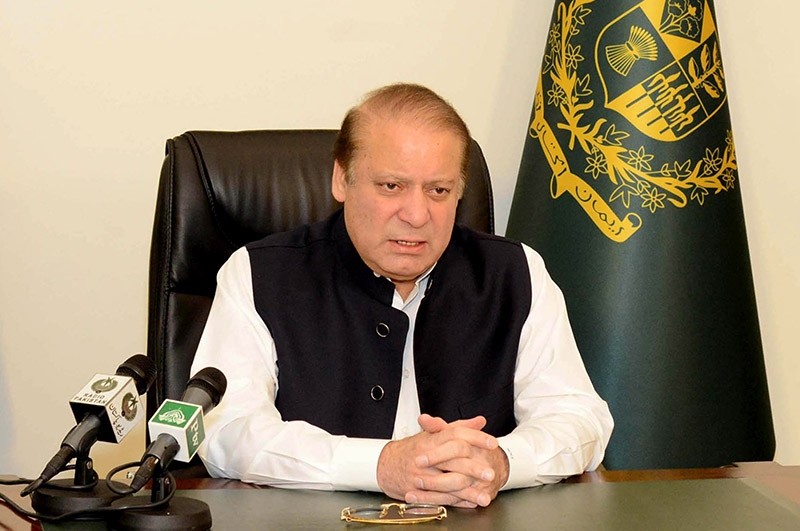
Quick Facts
- Country
 Pakistan
- Age
- 76
- Born
- 25 December 1949
- Height
- 5' 7" - 5' 8" (approx. 170-173 cm)
- Birthplace
- Pakistan
- Profession
- Politician, Entrepreneur, Business Man, Billionaire, Internet Personality
- Zodiac
- ♑ Capricorn
- Net worth
- $1.8 Billion
Early Life and Education
Mian Muhammad Nawaz Sharif was born on December 25, 1949, in Lahore, Pakistan into an upper-middle-class family of Punjabi Kashmiris. His father, Muhammad, was a businessman who co-founded the steel producer Ittefaq Group and founded the agricultural conglomerate Sharif Group. Nawaz Sharif has two younger brothers named Shehbaz and Abbas, both of whom became politicians like him. After attending St. Anthony’s High School, Sharif went to the Government College University, where he studied art and business. He went on to earn a law degree from the University of the Punjab.
General Information
| Attribute | Details |
|---|---|
| Date of Birth | 25 December 1949 |
| Age | 76 |
| Screen Name | Nawaz Sharif |
| First Name | Muhammad |
| Full Name | Mian Muhammad Nawaz Sharif |
| Gender | Male |
| Father | Muhammad Sharif |
| Mother | Shamim Akhtar |
| Siblings | Shahbaz Sharif, Abbas Sharif (deceased) |
| Religion | Islam |
| Birth Place | Pakistan |
| Residence | Pakistan |
| Nationality | Pakistan |
| Profession | Politician, Entrepreneur, Business Man, Billionaire, Internet Personality |
| Education | Punjab University Law College, St. Anthony High School, Lahore, Government College University Lahore |
| Spouse | Kulsoom Nawaz (Died 2018) |
| Relationship | Will Update Soon |
| No of Relationships | Will Update Soon |
| No. of Children | 4 (Maryam Nawaz Sharif, Hussain Nawaz, Asma Nawaz Sharif, Hassan Nawaz) |
| Awards | Will Update Soon |
| Zodiac Sign | Capricorn |
| Chinese Zodiac Sign | Will Update Soon |
| Weight | 82 kg |
| Height | 5′ 7″ – 5′ 8″ (approx. 170-173 cm) |
| Eye Color | Black |
| Net Worth | $1.8 Billion |
| Category | Politician, Entrepreneur, Business Man, Billionaire, Internet Personality |
Social Media & Online Profiles
| Platform | Details |
|---|---|
| PML-N Official – 171.8K+ (Personal/official fan pages vary) | |
| Facebook Page | Muhammad Nawaz Sharif MNS – 568.2K |
| Twitter (X) | NawazSharifMNS – 1.2M+ |
| TikTok/Douyin | Will Update Soon |
| Youtube | Sharif Channel – 2.2M+ |
Online Profiles & Databases
| Platform | Details |
|---|---|
| My Drama List | Will Update Soon |
| Wikipedia | Nawaz Sharif |
| Baidu Wiki | Will Update Soon |
| Douban | Will Update Soon |
| IQIYI | Will Update Soon |
| Grokipedia | Nawaz Sharif |
| Fandom | Nawaz Sharif |
| Famous Fix | Will Update Soon |
| Famous Birthday | Nawaz Sharif |
| Rotten Tomatoes | Will Update Soon |
| The Movie DataBase (TMDB) | Nawaz Sharif |
| IMDb | Nawaz Sharif |
Business Career And Entry Into Politics
Wealth and Business Interests
Nawaz Sharif’s net worth is rooted in the Ittefaq Group, a steel conglomerate founded by his father in the 1930s. After its nationalization by Zulfikar Ali Bhutto in the 1970s, Sharif entered politics to defend the family’s assets, ultimately regaining control and expanding their holdings throughout the Middle East and Pakistan. He also controls the Sharif Group, which holds major interests in agriculture and sugar production. Sharif’s wealth has long drawn criticism for its lack of transparency. His net worth, reportedly between $1.5 and $1.8 billion, includes luxury properties abroad and extensive land holdings in Pakistan. These assets have been the subject of multiple corruption investigations and court cases.
Start of Political Career
Sharif first got into politics in response to Pakistani Prime Minister Zulfikar Ali Bhutto, whose nationalization measures threatened the Sharif family’s control of its steel business. In the latter half of the 1970s, he joined the Tehreek-e-Istiqlal and Pakistan Muslims League political parties. By the 1980s, Sharif had become a prominent supporter of Muhammad Zia-ul-Haq’s military dictatorship, and in 1981 was named by Zia as Punjab’s minister of finance. In this role, Sharif privatized and deregulated industries in Punjab, making the province the richest in India. Meanwhile, he invested in various oil-rich Arab countries to rebuild his family’s steel empire.
Chief Minister of Punjab
Backed by the military, Sharif became Chief Minister of Punjab in 1985. During his reign, he expanded military infrastructure, beautified Lahore, and suppressed political dissent while enriching himself. Sharif was reelected in 1988 following the death of General Zia and the end of martial law.
Prime Minister, 1990-1993
In 1990, Sharif became head of the right-wing Islami Jamhuri Ittihad alliance, which he led to victory in that year’s manipulated general elections. He subsequently became the 12th prime minister of Pakistan, succeeding Benazir Bhutto. During his first term, Sharif focused on privatizing industries; expanding infrastructure, telecommunications, and the nuclear energy program; and promoting Islamization and religious conservatism. He was also involved in several conflicts, including a growing antagonism between liberal and conservative factions that caused him to launch a violent paramilitary operation. Sharif’s policies and his power struggle with President Ghulam Ishaq Khan led to a constitutional crisis, and under pressure from the military, Sharif resigned as prime minister in July of 1993.
Prime Minister, 1997-1999
Following the reelection of Benazir Bhutto as prime minister in 1993, Sharif partnered with Bhutto’s younger brother Murtaza to undermine the government. Bhutto’s popularity declined significantly over the ensuing years, leading to her ousting in 1996. Subsequently, in the 1997 general elections, Sharif was reelected as prime minister when he led the Pakistan Muslim League to a landslide victory. He began to consolidate power during his second term, amending the constitution to restrict the powers of the president to dismiss governments. Sharif also made Pakistan the first Muslim country to go nuclear, which occurred in 1998. However, he also caused another constitutional crisis, and soon fell out of favor with both the public and the military as Pakistan became involved in multiple international conflicts. This led to the 1999 military coup d’état in which Sharif was deposed.
Third Term As Prime Minister
Sharif executed a remarkable political comeback in 2013, securing a third term as prime minister when the PML-N won a resounding victory in the May legislative elections. The victory was not without controversy, though. The rival Pakistan Tehreek-e-Insaf (PTI) party, led by Imran Khan, denounced the elections as rigged and held protests in Islamabad for several months.
At the forefront of the agenda for the incoming administration were three issues identified as “the three E’s”—economy, energy, and extremism. Under Sharif the economy improved substantially, with higher growth rates, a stable rupee, and lower inflation. Energy and extremism, though, proved more challenging. Electricity demand continued to outpace supply, resulting in frequent and widespread shortages that were often exacerbated by the overall fragility of Pakistan’s power infrastructure. Meanwhile, development of infrastructure was spurred by billions of dollars in loans from China as part of the China-Pakistan Economic Corridor (CPEC) program that launched in 2015, although the massive lending also saddled Pakistan with an enormous debt burden to China.
In terms of foreign policy, Sharif stepped on the toes of military leaders by pushing for improved relations with India, pledging not to meddle in Afghanistan after the 2014 withdrawal of NATO troops, and seeking a settlement with Tehreek-e Taliban Pakistan (TTP) an Islamist insurgency based in Pakistan and unaffiliated with the Taliban in Afghanistan. These positions were at odds with the military’s security interests. When opposition protests in 2014 provided a premise for the military to oust Sharif with popular support, the military instead used the opportunity to pressure Sharif to submit to the military on matters of foreign policy and defense.
Meanwhile, the government struggled to respond to extremist attacks. After a devastating attack by the TTP on a school in Peshawar killed about 150 people in December 2014, the government instituted a 20-point National Action Plan against extremism, which included measures for regulating religious institutions and trying terrorism suspects before military tribunals instead of civilian courts. Although at the outset the plan appeared to have widespread support throughout Pakistani society, political and institutional rivalries soon reemerged, hampering implementation.
Convictions And Exile
Put on trial by the military following the 1999 takeover, Sharif was convicted of kidnapping, attempted murder, corruption, terrorism, and hijacking a plane, and was sentenced to life in prison. He was also convicted for tax evasion and given a 14-year sentence. Sharif was placed in exile for a decade and was ordered to stay away from Pakistani politics for 21 years.
In 2016, Nawaz Sharif’s financial dealings came under global scrutiny when the Panama Papers revealed that his children owned offshore companies used to purchase high-end London properties. The disclosures fueled long-standing accusations that the Sharif family had funneled wealth abroad through undeclared assets and money laundering, much of it allegedly tied to state contracts and kickbacks from his time in office.
Return To Pakistan
In 2023, with the 2024 general elections within sight, the chances of Nawaz Sharif’s return to office appeared increasingly favorable. Khan, who had been disqualified from public office in October 2022 following allegations of corruption, was briefly detained in May 2023 after accusing a military officer of being behind an assassination attempt against him. A fierce reaction from his supporters led to a crackdown against his PTI party. In June Sharif was acquitted on one of the major charges lodged against him, and the next day the National Assembly passed a law that would make it easier for Sharif to become eligible to run for office. In October 2023 he returned to Pakistan to appeal his earlier convictions and they were overturned by a federal court in December. The following week, Sharif filed the paperwork for his candidacy to run for a seat in the National Assembly. Although Sharif was able to win a return to the parliament, a surprisingly strong showing for the PTI denied the PML-N a plurality of directly elected seats. The PML-N was then forced to rely on support from the PPP to form a government and Shehbaz Sharif was put forward as the compromise candidate for prime minister.
Post-Premiership
In 2018, the Pakistani Supreme Court ruled that Sharif was disqualified from holding public office for life due to his involvement in the Panama Papers case. He was subsequently sentenced to ten years in prison by an accountability court. In 2019, Sharif relocated to London to receive medical treatment on bail. Although declared an absconder, he was eventually granted protective bail by the Islamabad High Court in two of his ongoing corruption cases. After four years in exile, Sharif returned to Pakistan in 2023 and was acquitted in those cases by the IHC. He soon regained leadership of the Pakistan Muslim League, and began a campaign for a fourth term as prime minister in 2024. Although Sharif won a seat in the National Assembly due to election rigging, his party failed to claim a simple majority.
Net Worth
Nawaz Sharif is a Pakistani politician and businessman who has a net worth of $1.8 billion. Nawaz Sharif earned his fortune primarily through his family’s industrial empire, the Ittefaq Group, one of Pakistan’s largest steel producers. The longest-serving prime minister in Pakistan’s history, he served three non-consecutive terms, with two in the 1990s and one in the 2010s. All three of his terms ended in an ousting, and he was exiled for several years amid criminal convictions, corruption investigations, and controversies related to his wealth.
Frequently Asked Questions
How old is Nawaz Sharif Ex-Prime Minister Of Pakistan?
Nawaz Sharif Ex-Prime Minister Of Pakistan is 76 years old (born 25 December 1949).
What is Nawaz Sharif Ex-Prime Minister Of Pakistan's net worth?
Nawaz Sharif Ex-Prime Minister Of Pakistan's estimated net worth is $1.8 Billion.
How tall is Nawaz Sharif Ex-Prime Minister Of Pakistan?
Nawaz Sharif Ex-Prime Minister Of Pakistan's height is listed as 5' 7" - 5' 8" (approx. 170-173 cm).
Where was Nawaz Sharif Ex-Prime Minister Of Pakistan born?
Nawaz Sharif Ex-Prime Minister Of Pakistan was born in Pakistan.
Which country is Nawaz Sharif Ex-Prime Minister Of Pakistan from?
Nawaz Sharif Ex-Prime Minister Of Pakistan is from Pakistan.
What does Nawaz Sharif Ex-Prime Minister Of Pakistan do?
Nawaz Sharif Ex-Prime Minister Of Pakistan's profession is listed as Politician, Entrepreneur, Business Man, Billionaire, Internet Personality.
What is Nawaz Sharif Ex-Prime Minister Of Pakistan's zodiac sign?
Nawaz Sharif Ex-Prime Minister Of Pakistan was born under the zodiac sign Capricorn.
Compare Net Worth
Nawaz Sharif Ex-Prime Minister Of Pakistan
$1.8 Billion
VS
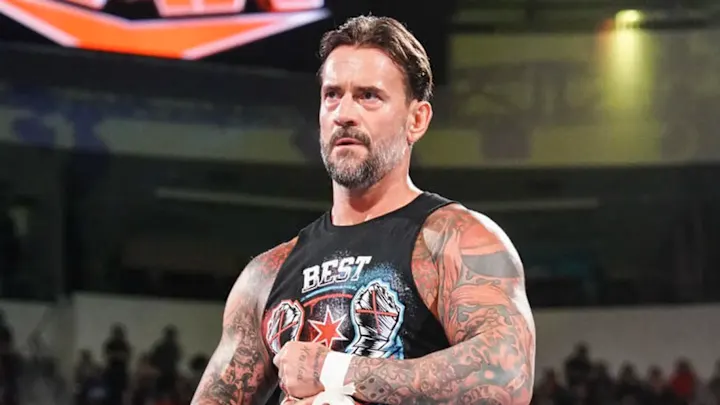 CM Punk American Wrestlers
$12 Million
Who's richer? Compare now →
CM Punk American Wrestlers
$12 Million
Who's richer? Compare now →

 India
India
 USA
USA



 Zimbabwe

Leave a Reply