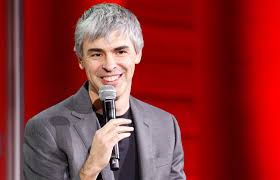
Larry Page, the co-founder of Google. It covers his early life, education, career milestones, controversies, net worth, and social media presence (or lack thereof). It aims to provide a balanced perspective on one of the most influential figures in the technology industry.
Larry Page Early Life and Education
Lawrence “Larry” Page was born on March 26, 1973, in East Lansing, Michigan. His parents, Carl Victor Page Sr., a professor of computer science at Michigan State University, and Gloria Page, a computer programming instructor at Lyman Briggs College, instilled in him an early interest in computers and technology. His home was filled with computers and scientific magazines, fueling his curiosity and passion for innovation.
Page attended Okemos Montessori School and later graduated from East Lansing High School in 1991. He then pursued a Bachelor of Science degree in computer engineering from the University of Michigan, graduating with honors. During his time at Michigan, he explored various projects, including building a functional inkjet printer from Lego bricks.
In 1995, Page enrolled in the computer science Ph.D. program at Stanford University. It was here that he met Sergey Brin, and their collaboration would eventually lead to the creation of Google.
Larry Page Career: The Genesis of Google
Page’s initial research at Stanford focused on exploring the mathematical properties of the World Wide Web. He envisioned a system that could analyze the relationships between websites, ranking them based on the number and quality of links pointing to them. This idea, initially called “BackRub,” formed the foundation of what would become Google’s PageRank algorithm.
Teaming up with Sergey Brin, Page developed the PageRank algorithm and built a search engine prototype. They quickly realized the potential of their technology to revolutionize how people accessed information online. In 1998, they officially founded Google in a garage in Menlo Park, California.
As Google’s co-founder and later CEO, Page played a pivotal role in shaping the company’s vision and strategy. He oversaw the development of numerous innovative products and services, including Gmail, Google Maps, Google Chrome, and Android. His focus on user experience and technological innovation helped Google become the dominant search engine and one of the most valuable companies in the world.
In 2001, Eric Schmidt was brought in as CEO to provide experienced leadership as Google scaled rapidly. Page remained president of products. In 2011, Page returned as CEO, streamlining operations and focusing on ambitious projects like self-driving cars (Waymo) and life extension technologies (Calico). In 2015, Google restructured under a new holding company called Alphabet Inc., with Page becoming the CEO of Alphabet, overseeing Google and its various “moonshot” projects.
In December 2019, Page and Brin stepped down from their executive roles at Alphabet, with Sundar Pichai, the CEO of Google, taking over as CEO of Alphabet. While they no longer hold day-to-day management positions, Page and Brin remain board members and significant shareholders of Alphabet.
Google’s Rise to Dominance
Under Page’s leadership, Google experienced rapid growth and expansion. The company introduced a range of innovative products and services, including Gmail, Google Maps, Google Docs, and Android, the mobile operating system that now powers billions of devices worldwide.
Page served as Google’s CEO from 1997 to 2001 and again from 2011 to 2015. During his tenures, he focused on long-term vision, product development, and strategic acquisitions. He fostered a culture of innovation within Google, encouraging employees to pursue ambitious projects and experiment with new technologies. This approach led to the development of groundbreaking products and cemented Google’s position as a leader in the tech industry.
One of Page’s key contributions was his emphasis on “moonshot” projects – ambitious, high-risk ventures with the potential to revolutionize industries. These projects, often pursued through Google’s X division (formerly Google X), included self-driving cars (now Waymo), internet-beaming balloons (Project Loon), and energy-generating kites (Makani).
Transition to Alphabet Inc.
In 2015, Page and Brin announced a major restructuring of Google, creating a new parent company called Alphabet Inc. This reorganization allowed Google to focus on its core internet businesses, while other ventures, such as Waymo and Verily (a life sciences company), could operate independently under the Alphabet umbrella.
Page became the CEO of Alphabet, overseeing the company’s overall strategy and long-term vision. This move allowed him to focus on exploring new technologies and expanding Alphabet’s portfolio of innovative companies.
| Category | Details |
|---|---|
| Full Name | Lawrence Edward Page |
| Date of Birth | 26 Mar 1973 |
| Age | 51 Years |
| Birth Place | Lansing, Michigan, United States |
| Residence | New Zealand |
| Country | United States |
| Nationality | United States |
| Profession | Business Man |
| Education | University of Michigan, Stanford University, Michigan State University |
| Father | Carl Victor Page |
| Mother | Gloria Page |
| Sibling | Unknown |
| Spouse | Lucinda Southworth (2007) |
| Children | 2 Childrens |
| Net Worth | 271.7 Billion USD |
| Category | Business Man |
Larry Page Social Media
Larry Page maintains a very low profile on social media. He does not have active accounts on platforms like Twitter, Facebook, or Instagram. This is consistent with his general preference for privacy and his focus on technological innovation rather than self-promotion. While he may occasionally appear in Google-related announcements or events, he generally avoids the spotlight and prefers to let his work speak for itself. His absence from social media is a deliberate choice, reflecting his personality and priorities.
Philanthropy and Other Ventures
Beyond his work at Google and Alphabet, Page has been involved in various philanthropic and entrepreneurial endeavors. He and Sergey Brin established the Page and Brin Foundation, which supports initiatives in education, poverty alleviation, and environmental conservation.
Page has also invested in renewable energy projects and research into sustainable transportation. He is a strong advocate for technological solutions to global challenges and believes that innovation can play a crucial role in addressing issues such as climate change and poverty.
Larry Page Legacy and Impact
Larry Page’s contributions to the technology industry are undeniable. As the co-founder of Google, he revolutionized the way people access and interact with information. His leadership and vision transformed Google from a small startup into a global technology giant.
Page’s emphasis on innovation, long-term thinking, and ambitious projects has inspired countless entrepreneurs and engineers. His legacy extends beyond Google, influencing the development of new technologies and shaping the future of the internet. He stepped down from his role at Alphabet in December 2019, but remains a board member and controlling shareholder. His impact on the world of technology and beyond will continue to be felt for generations to come.
Larry Page Controversies
Like many high-profile tech leaders, Larry Page has faced his share of controversies:
- Privacy Concerns: Google’s vast data collection practices have raised concerns about user privacy. Critics argue that Google’s tracking and profiling of users can lead to privacy violations and potential misuse of personal information.
- Antitrust Issues: Google’s dominance in the search engine market has attracted antitrust scrutiny from regulators around the world. Concerns have been raised about Google’s potential to stifle competition and abuse its market power.
- Tax Avoidance: Google has been criticized for using complex tax strategies to minimize its tax liabilities. Critics argue that these practices deprive governments of much-needed revenue.
- AI Ethics: As Google invests heavily in artificial intelligence, concerns have been raised about the ethical implications of AI development. Questions have been asked about bias in algorithms, the potential for job displacement, and the responsible use of AI technology.
- Project Maven: Google faced internal and external criticism for its involvement in Project Maven, a Pentagon project that used AI to analyze drone footage. Critics argued that Google’s participation in the project could contribute to the development of autonomous weapons and raise ethical concerns about the use of AI in warfare.
Larry Page Net Worth
As of late 2026, Larry Page’s net worth is estimated to be around $271.7 billion, making him one of the wealthiest people in the world. His wealth is primarily derived from his ownership stake in Alphabet Inc.
