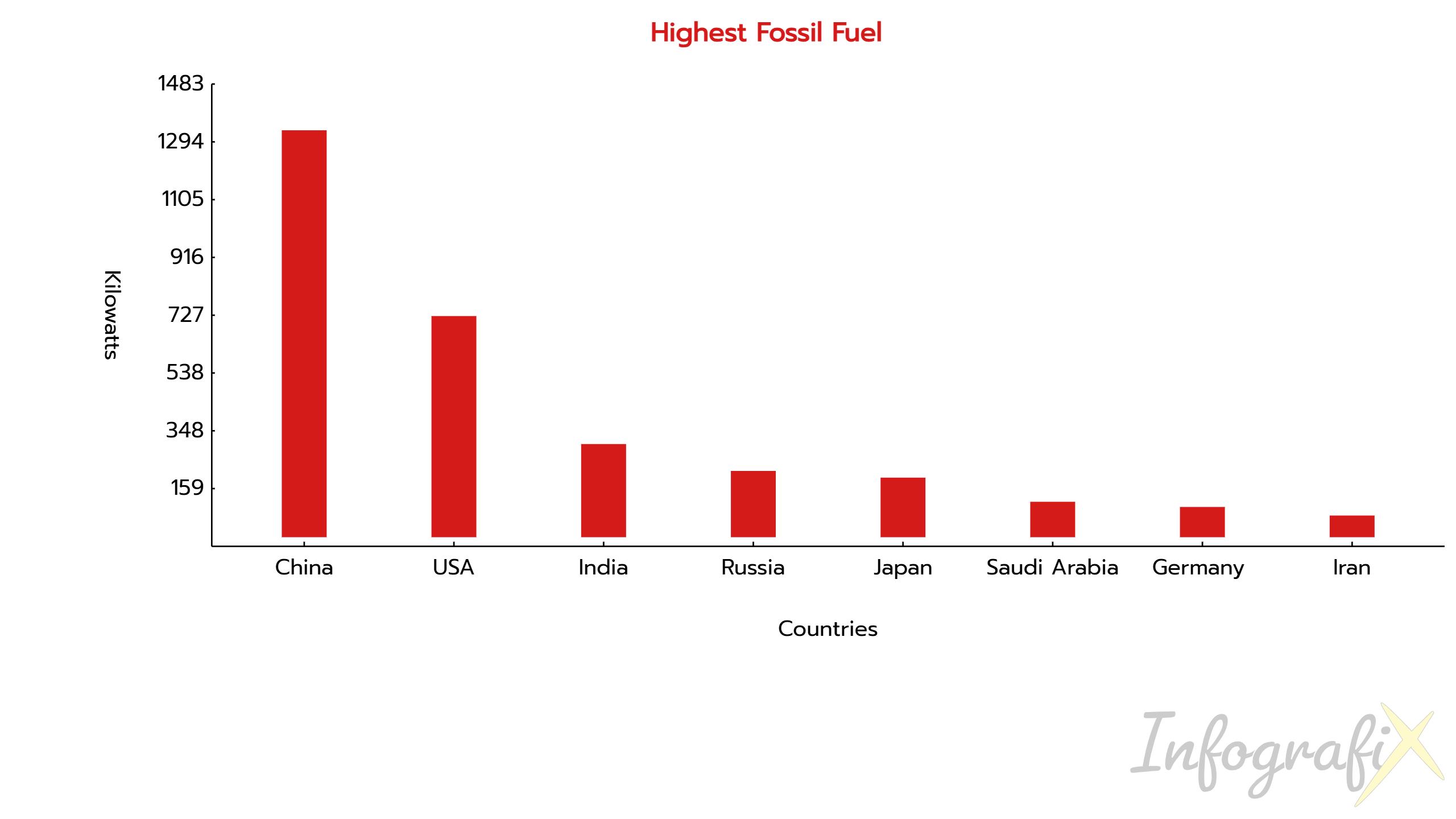
When we talk about electricity generation we are talking about the base of our world. The picture chart from the U.S. Energy Information Administration shows us something about how we make energy around the world as of 2022. Electricity generation, from fossil fuels is still the main thing people talk about when they talk about electricity generation. Electricity generation is a deal and fossil fuels are a big part of electricity generation.
From coal plants in China to gas facilities all over the United States fossil fuel electricity capacity shows us how industries have grown, how economies have developed and the problems we still face with changing to new energy sources. This analysis looks at the twenty countries that have built the most fossil fuel power generation infrastructure in the world which is worth billions of dollars and is the result of many years of decisions, about energy policy and fossil fuel electricity capacity. Fossil fuel electricity capacity is a part of this story.
The Dominant Giant: China’s Massive Fossil Fuel Infrastructure
China uses a lot of coal for energy. In fact coal made up 56.2 percent of Chinas energy use. This is happening even though China is building a lot of wind power. The reason China still uses much coal is because of how fast the country has been growing. For a time China has been getting bigger and bigger really quickly. This means China needs a lot of energy. Since the year 2000 the amount of electricity China generates has grown a lot. It has actually grown than six times bigger. China went from generating 1,347 terawatt-hours of electricity to generating 8,840 terawatt-hours by the year 2022. Chinas energy use and coal use is closely tied to this growth. Coal is a part of Chinas energy use. The growth of China has been really good for factories and cities. It has helped millions of people in China escape being poor.. There is a bad side to this growth. 70 Percent of the electricity in China still comes from fossil fuels, like coal. This is weird because fossil fuels do not make up half of the things that can make electricity in China. The growth of China is still using a lot of fuels for electricity.
The difference between what power plantsre capable of producing and what they actually produce is pretty big. This shows that renewable energy sources like wind and solar energy are not able to give us power all day like coal plants can. China has a lot of coal power plants. In the year 2021 China had 1,080 gigawatts of coal power which is about half of all the power plants in the country. Renewable energy sources like wind and solar energy are not as reliable, as coal plants. Chinas coal infrastructure is really big. It plays a major role in the countrys power supply.
Coal plants in China made than half of the worlds coal-fired electricity in 2020. China said it will stop carbon emissions from getting worse before 2030.. Then it allowed five gigawatts of new coal power in early 2021. This just shows how hard it is for China to balance making money and taking care of the environment. Coal plants, in China are still a part of the problem. China needs to deal with coal power if it wants to meet its goals.
America’s Energy Powerhouse: The United States
The United States is in the place when it comes to electricity made from fossil fuels around the world with a total of 724.22 million kilowatts, which is about half of what China has which is 1,332.39 million kilowatts. The United States has a lot of power plants, including natural gas plants in Texas and coal facilities in the Midwest. This means the United States is the biggest producer of electricity in the world.
In the year 2020 the United States made 4.2 petawatt-hours of electricity every year. Natural gas was used to make 40 percent of this electricity coal was used to make 19 percent nuclear power was used to make 20 percent and renewables, like wind power were used to make the rest, which is 21 percent of the electricity the United States produced.
The United States is known for using a lot of kinds of fossil fuels. The United States is different from China because China uses a lot of coal. The United States has started using gas more often over the past twenty years.
This happened because of the shale gas boom. The shale gas boom made natural gas cheaper by using fracturing. Natural gas is a choice than coal because it makes 50 to 60 percent less carbon dioxide. This means natural gas is a fossil fuel than coal.
However when natural gas is being made and transported sometimes methane leaks out. These methane leaks can make gas not as good, for the climate as we thought. The United States and natural gas have to deal with these methane leaks. Natural gas and the way it is made can affect the climate.
The United States fossil fuel industry is really good for the economy. It makes a lot of money over 138 billion dollars every year from 2015 to 2019 from things like royalties and taxes and lease sales. This money is used to pay for things that people need like healthcare and education and roads. The United States fossil fuel industry also gives jobs to a lot of people people who work getting the fuel out of the ground and people who work at power plants. The good things, about the United States fossil fuel industry do not include the bad things it does to the environment and peoples health.
India’s Growing Energy Appetite
India is a country with a lot of people so it needs a lot of electricity. India has 305.45 million kilowatts of fossil fuel electricity capacity which’s the third highest in the world. This shows that India needs a lot of energy. India is the biggest user of electricity in the world and it has around 1.4 billion people living there. So India has a problem to solve: it needs to grow its economy quickly but it also needs to do something, about climate change. In the year 2022-23 India mostly used fossil fuels to make electricity, which was 56.8 percent of the total. Coal was the part of this India used a lot of coal to make electricity. Indias fossil fuel electricity capacity is still very high.
There are a lot of plans for coal power plants. In fact people have proposed a record number of coal power plants. This year, 2024 people have proposed coal power plants that can produce 38 gigawatts of power. This is a deal because that is a lot of coal power plants. The number of coal power plant proposals is really high, with 38 gigawatts of coal power proposed in 2024.
India really needs fuels to make electricity. Most of the electricity in India comes from fuels. In fact coal is used to make a lot of electricity in India. Coal makes up 71.3 percent of the electricity that India generates. India has been growing fast and this is because of the electricity that coal gives. The people of India needed a lot electricity. In the year 2000 India used 573 terawatt-hours of electricity. By 2022 this number went up to 1,836 terawatt-hours. So India built coal power plants to make more electricity. The coal power plants helped to meet the increasing demand for electricity, in India. Indias electricity demand was met by the coal power plants.
Something big is happening in Indias energy sector. The year 2025 was really good for electricity production in Indias energy sector. It went up by 20 percent, which’s a lot and this helped utilities in Indias energy sector use less fossil fuel to make electricity. Now clean energy makes up one-third of all the electricity that utilities, in Indias energy sector produce. This is because Indias energy sector had a lot of energy, hydropower and nuclear energy, which are all types of clean energy.
In the half of 2025 the utilities made a lot of clean electricity a record 236 terawatt-hours of clean electricity. This is an increase from the first half of 2024 the utilities made 20% more clean electricity. Because of this the utilities used fossil fuel to make electricity a decrease of 4% from the year before. The utilities made 691 terawatt-hours of electricity from fossil fuel in the first half of 2025, which is less than the year before. The clean electricity, from the utilities is really growing the utilities are making clean electricity every year.
India is still going ahead with its coal expansion plans. The country made a record in 2024 for coal power plant proposals, which is a total of 38 gigawatts of capacity. Indias government has said it will reduce the use of coal. It has not given a specific timeline for this. Indias coal use is something that the Indian government needs to think about and Indias coal expansion is an issue, for India.
Fossil fuels make up a part of Indias electricity. In fact they generated 78 percent of Indias electricity in 2024. This makes the power sector the biggest source of emissions for India.
The power sector emissions have gone up over the twenty years. This is mainly because India is using coal. However the emissions per person in India are still much lower than the emissions per person, in the world. Fossil fuels are a part of the problem and fossil fuels are what India is mostly using for electricity.
Russia’s Fossil Fuel Foundation
Russias energy plan shows what the country really cares about. Russia made a plan called “Energy Strategy to 2035” in 2020. This plan is about keeping oil production the same and selling more gas and coal to other countries for the next fifteen years. At the time Europe and China were making plans to use less fossil fuels.. Russia decided to keep using fossil fuels even more. Russia gets 14 percent of its energy from coal. The country sells a lot of coal to countries and this brings in a lot of money. About 17 billion dollars per year. Which is a big part of the money the government uses to do things. Russias energy plan is, about Russias energy and what Russia wants to do with it. Russia is going to be the coal exporter in the world. This will happen if Russia gets a share of the global coal trade. Now Russia has eleven percent of the global coal trade. The plan is for Russia to have twenty five percent of the coal trade by the year twenty thirty five. If this happens then Russia will be the coal exporter in the world. Russia will export coal than any other country if it meets this goal. The global coal trade is very important, to Russia. Russia wants to increase its share of the coal trade and become the biggest coal exporter.
The natural gas situation is really big. Russia wants to make a lot of liquefied gas or natural gas that is a liquid and sell it to other countries. By the year 2035 Russia wants to sell a lot natural gas going from 27 million tons of natural gas per year to 140 million tons of natural gas, per year. This means Russia will have a part of the market going from 8 percent to 20 or 25 percent of the natural gas market. Russia will sell 30 percent natural gas in total even though the United States and the Middle East are also selling a lot of natural gas at low prices. In the year 2020 Russia made 0.1 gigawatts of wind power and 1.1 gigawatts of power. This is a part of the total electricity Russia generates, which is 253 gigawatts. Russia has a plan that says wind power and solar power which are types of renewable energy will make up only four percent of the energy Russia uses by the year 2035. Russia is talking about energy, like wind power and solar power and how they will be a small part of the energy mix.
Japan’s Energy Transition Challenge
Before the Fukushima disaster happened nuclear energy was a part of Japans electricity. The accident, at Fukushima made them shut down all the nuclear reactors. This meant Japan had to buy a lot fossil fuels from other countries to make up for the loss of nuclear energy. Japan had to do this to fill the gap that was left when the nuclear reactors were shut down. The Fukushima disaster really changed the way Japan gets its electricity.
By 2019 the electricity capacity had 194 gigawatts of generation. This means that fossil fuels were the source of electricity. Japan makes one petawatt-hour of electricity every year. Fossil fuels are used to make, about 70 percent of this electricity. Japan is also the worlds largest coal importer when it comes to coal. The country relies heavily on fuels, including coal to generate electricity. Japan generates a lot of electricity from fuels every year.
Japans energy situation is changing. The country is now number two in the world for energy. Japan has 62 gigawatts of power from 2019. Solar energy is now as big as energy, in Japan. Each of them makes up seven percent of the power Japan uses.
Japan is also getting wind power. The country will have 6.8 gigawatts of wind power by the year 2024.
The government wants to make sure we do not add to carbon in the air by 2050. This means we need to cut down on bad things we release into the air after 2030.. Japan still uses a lot of fossil fuels and that is a big problem for Japan to deal with. The government has to reduce carbon emissions from fuels to achieve carbon neutrality. Japans carbon emissions are still very high because of fuels.
Saudi Arabia’s Fossil Fuel Dependence and Solar Boom
Saudi Arabias solar energy is really taking off. A few years ago in 2020 Saudi Arabia had almost no solar energy to speak of.. Things are changing fast. By the end of 2025 Saudi Arabia is expected to have a lot of energy. Twelve gigawatts of solar capacity to be exact. This is a deal. In 2025 Saudi Arabia put up many new solar projects that it became one of the top ten countries in the world for new solar energy. The Al Shuaibah 2 solar farm is the one in Saudi Arabia and it is huge. It can make over two gigawatts of energy which is enough to power around 350,000 homes. Saudi Arabias solar energy is growing quickly. It will be interesting to see what happens next, with Saudi Arabias solar energy. Solar farms that are even bigger are being planned over the desert. These new solar farms will be really big. They will be in the desert. The people in charge are making plans for these solar farms. Solar farms are a part of the plan and they will be all, across the desert.
Saudi Arabia wants to get fifty percent of its electricity from sources by the year 2030. The country is really working hard to make this happen.
In the month of July two big companies, ACWA Power and Saudi Aramco said they will invest eight point three billion dollars in energy. They are planning to make gigawatts of renewable energy and most of it will be from solar energy.
By the year 2030 Saudi Arabia expects that solar energy will become very big and grow quickly. Renewable sources like energy will be very important, for Saudi Arabia.
Saudi Arabia is still going to get fifty percent of its electricity from gas, which is not good for the planet. This means we are seeing a lot of gas infrastructure being built at the same time that solar energy is becoming more popular.
The country got ninety nine percent of its electricity from fuels in 2023, which is a lot more than the average for the whole world. Saudi Arabia and its use of fuels, like natural gas is a big problem.
Germany’s Transition from Coal
Germany is in place with a lot of fossil fuel electricity capacity it has 99.24 million kilowatts. This is a change for Germany. Germany has always been a leader in Europe when it comes to changing how we get energy. Germany is really working hard to use renewable energy and get rid of nuclear and coal power.
In Europe a lot more coal plants were closed in 2024 it was four times more than the year. In 2024 11 gigawatts of coal plants were closed that is a lot more than the 2.7 gigawatts that were closed in 2023. Germany closed 6.7 gigawatts of coal capacity in 2024 that is a deal, for Germany and its fossil fuel electricity capacity.
In the five years the amount of electricity made from coal in Europe has gone down a lot. It dropped by 182 terawatt-hours, which’s a big decrease of 40 percent. Some countries like Austria, Sweden and Portugal do not use coal all anymore. Germany is a country that has a lot of coal plants. They closed many of them in the last few years. The amount of electricity made from gas also went down each year. It was 139 terawatt-hours less in 2024 than it was in 2019 which is a decrease of 24 percent. These changes show how much Germanys energy sources have changed. Coal generation in Europe and coal generation, in Germany are really going down.
The transition has not been easy for Germany. Germanys climate goals are really big. Germany wants to cut Germanys greenhouse gas emissions by a lot, 65 percent by the year 2030 compared to what they were in 1990.. Germany also wants to achieve something called climate neutrality by the year 2045. This means Germany needs to make some changes, to Germanys energy system.
The country got nine billion euros to help develop hydrogen. They will use two billion euros of this money to work with countries. Germany has a plan called the National Hydrogen Strategy. This plan says that Germany will need a lot of hydrogen around ninety to one hundred ten terawatt-hours by the year 2030. They will have to get some of this hydrogen from countries because they cannot make enough of it on their own.
The European Union has done a thing over the last five years. They have saved fifty nine billion euros that they would have spent on fuels, like oil and gas. They did this by building wind and solar power systems.
South Korea’s Fossil Fuel Dependence
South Korea has a lot of fossil fuel electricity capacity it is actually number eight with 90.11 million kilowatts. The state power utility company, which is called KEPCO had an amount of installed capacity in the year 2021. This capacity was than 90 gigawatts. If we break it down we have 37 gigawatts of coal-fired capacity and 19 gigawatts of gas-fired capacity. South Korea also uses power and it has 24 gigawatts of installed nuclear power capacity. Nuclear power and fossil fuel electricity capacity like coal-fired capacity and gas-fired capacity are important, for South Korea. The company made a lot of electricity in 2021. They made 400 terawatt-hours of electricity. Most of the electricity 172 terawatt-hours came from coal. This is 43 percent of the electricity the company made. The company also made 158 terawatt-hours of electricity from nuclear. This is 40 percent of the electricity they made. The company made electricity from gas too 55 terawatt-hours of it. This is 14 percent of the electricity the company made from electricity sources, like coal and nuclear and gas. The company uses coal and nuclear and gas to make electricity.
In April 2025 South Korea got than half of its electricity from fossil fuels for the first time. This was 49.5 percent of the electricity or 21.8 terawatt-hours. The time it was this low was in May 2024 when fossil fuels made up 50.4 percent of the total.
The reason, for this drop was that South Korea used a lot coal to generate electricity. In April 2025 coal was used to generate 18.5 percent of the electricity or 8.2 terawatt-hours. In 2024 coal was used to generate 30 percent of South Koreas electricity. Fossil fuels, including coal made up 60 percent of South Koreas electricity in 2024.
South Korea uses fossil fuels for most of its energy needs about 90 percent. This means the country has to buy a lot of fuel from countries, which can be a big problem for its economy. For example in 2022 South Korea had to pay a 17 billion dollars for electricity because it relied too much on fossil fuels. The energy crisis happening now is a deal for South Koreas economy and safety. Now clean electricity only makes up 39 percent of the total electricity generated. People in South Korea are going to need electricity about 30 percent more by the year 2035. South Koreas dependence, on fuels is still a major issue.
Iran’s Gas-Dominated System
Iran has the place with 71.45 million kilowatts of electricity from fossil fuels. This number has not changed since 2021. It is still the same in 2023. Iran uses fossil fuels to make 92 percent of its electricity in 2024. This is a lot more than the average in the world which uses carbon sources for 41 percent of its electricity. Iran gets most of its electricity from hydro which is six percent. The country also uses wind and solar for electricity. This is only 0.5 percent which is a lot less than the average, in the world which is 15 percent. Irans fossil fuel electricity capacity is still 71.45 million kilowatts.
Irans power sector emissions have gone up a lot over the twenty years. This is because people in Iran are using more electricity. To meet this demand Iran has been generating electricity from gas. Iran is one of the users of electricity in the world. In fact it is the largest user of electricity in 2024. The Iran Energy Yearbook, for 2020 says that Iran has a lot of power capacity. Over 85 gigawatts. Irans electricity generation system relies heavily on gas. This is because Iran has a lot of gas and it is a big producer of energy. Irans power sector emissions and Irans electricity generation system are closely linked to gas.
Iran uses a lot of fuels and this is really bad for the environment and peoples health. Iran is one of the emitters of methane from coal mines. The country has a time finding new ways to make energy because of economic sanctions and not much help from other countries on clean energy. Iran has a lot of sunshine so it is a place for solar energy but the country has not done much with renewable energy, like solar power compared to its fossil fuel infrastructure. Irans fossil fuel infrastructure is still very big while its renewable energy is very small. Iran needs to do something about this.
Mexico’s Balanced Fossil Fuel Mix
Mexico is the one on the list of top ten countries with 71.08 million kilowatts of fossil fuel electricity capacity. The country of Mexico saw a lot of changes in the way it uses coal to make electricity in the year 2023. Mexico produced 12 terawatt-hours coal, which is a big increase of 55 percent. This big increase happened because Mexico had to use coal and gas to make up for not having enough hydropower due to drought. Mexico needs to keep adding more electricity generation capacity to meet the needs of its people and Mexico has a lot of people, around 130 million.
Mexico is a part of the American energy market with the United States and Canada. This means Mexico has to deal with electricity going forth across the borders. It is a complicated situation and it affects the energy security.
Mexico wants to use renewable energy like wind and solar. However fossil fuels are still a part of the energy mix in Mexico.
The government of Mexico has made some changes to the energy policies. These changes are affecting the way public and private companies are involved in making electricity. Mexico is still working on these energy policies. The changes are important, for Mexicos energy market.
Mexico is in a spot when it comes to electricity. The country needs to make sure people have the electricity they need now. At the time Mexico has to keep energy prices low so people can afford them.. On top of that Mexico has to think about the climate and what it can do to help.
Mexico made a promise to use transportation by signing the Belem transport pledge at COP 30. This means Mexico has to make changes to the way people get around by 2050. To do this the electricity sector in Mexico has to get a lot bigger. This is because more people will be using cars and other things that need electricity to work.
Mexico is lucky because it gets a lot of sunlight in the desert areas, in the north. This makes it a great place to build solar farms and other renewable energy projects.
Italy’s Declining Fossil Fuel Role
Italy is doing well because of the changes happening in Europe when it comes to energy. Europe is using a lot coal to make electricity and fossil fuels are not being used as much as they used to be in the European Union. Italy is part of the energy market and is following the climate rules, which is helping the country to move away from fossil fuels. Italy has a lot of sunshine because of where it’s in the Mediterranean so it is a great place for solar energy. The number of panels, in Italy has gone up a lot in the last few years. Italys solar potential is good and solar photovoltaic installations are getting more popular.
Italys energy security is really dependent on natural gas imports. Italy gets most of its gas from Russia and North Africa through pipelines. This makes Italy very vulnerable. We saw this during the energy crisis that happened after Russia invaded Ukraine. Italy wants to get gas from more places so it is not relying on just one supplier. Italy is also trying to increase its ability to import liquefied gas. Italy is connected to its neighbors electricity grids which helps with trading power and keeping everything secure. Italys natural gas imports are still a concern, for the country.
Indonesia’s Coal-Heavy Infrastructure
Indonesia is number twelve when it comes to using fossil fuels to make electricity with a total of 57.49 million kilowatts. Even though the country has promised to do something about climate change and use renewable energy it still relies heavily on fossil fuels.
The plan for Indonesias power grid over the ten years shows that the country will make a lot more clean energy going from 44 terawatt-hours to 172 terawatt-hours, which is a big increase. However Indonesias fossil fuel electricity capacity will also go up by a lot, 40 percent from 295 terawatt-hours to 407 terawatt-hours, which is a pretty big deal, for fossil fuels. Indonesias use of fuels is still a major part of the countrys energy plan.
Indonesia is going to add a lot of power from coal and gas around 16.6 gigawatts. At the time the country has lowered its goal for renewable power like solar and wind from 20.9 gigawatts to 18.6 gigawatts by the year 2030. This is a change from what Indonesia said it would do before. Indonesia also agreed to the Just Energy Transition Partnership. This new plan does not follow that agreement. The company in charge of power, in Indonesia, PLN is focusing on using coal and gas and it is not doing what it said it would do to use more renewable energy or stop using coal. Indonesia and the PLN company need to think about power, like solar and wind and not just coal and gas power.
Indonesia is a big deal when it comes to coal. It sends a lot of coal to other countries and it makes a lot of coal too. Because of this the energy choices that Indonesia makes are important for the world.
The country is not using a lot of energy which is energy that comes from natural things like the sun. Indonesia has a lot of sun so it could make a lot of electricity from power. In fact it could make, about 3,295 gigawatts of electricity from the sun.
As of 2024 Indonesia only has about 1.75 gigawatts of renewable power that is connected to the main power grid. Some of this power comes from solar energy about 625 megawatts worth. Indonesias renewable energy is still very small compared to what it could be.
Australia’s Coal Exports and Domestic Use
Australia is in the position with 53.22 million kilowatts of fossil fuel electricity capacity from Australia. The country Australia generates a lot of electricity from coal, which has always been the source of power for Australia especially in places like New South Wales and Queensland in Australia. Australia is also one of the coal exporters in the world sending hundreds of millions of tons of coal to countries, like Japan, South Korea and China every year from Australia.
The electricity sector in Australia is changing. This change is happening at speeds in different states. Australia has great resources for renewable energy. It is especially good for wind energy in the southern coastal areas. Australia is actually the best in the world when it comes to rooftop solar. Than three million homes in Australia use solar panels to generate electricity from the sun. The renewable energy resources in Australia like wind energy are some of the best, in the world.
The fossil fuel industry in Australia is really important. Australias coal and natural gas exports bring in a lot of money. Create many jobs, especially in smaller towns.. This also makes it hard for Australia to change to new energy sources. The people who live in these towns and work in the fossil fuel industry do not know what will happen to them. Australia is trying to create jobs in things, like renewable hydrogen production. This way Australia can use its sunshine and wind to make energy sources and still have money coming in from exports. Australias fossil fuel industry is a deal and Australia wants to make sure it can still sell energy to other countries.
Egypt’s Gas-Heavy Generation
Egypt is in place with 52.97 million kilowatts of electricity that comes from fossil fuels. The country uses a lot of fuels to make electricity about 90% of the time which is a lot more than most other places. This was the case in 2019. Egypt wants to use renewable energy like solar power, which is getting bigger. In 2019 solar power made up 3% of the electricity in Egypt, which’s more than it was before.. Fossil fuels, like natural gas are still the main source of electricity, in Egypt. Egypt is still using a lot of fuels to make electricity.
Egypt has a lot of gas and it wants to be the main place for energy in the region. The country has built facilities to export and import liquefied natural gas.
The demand for electricity in Egypt is going up because there are now, than 100 million people living there and the economy is getting better.
Egypt has to figure out how to give people the electricity they need while also dealing with the cost of subsidies and taking care of the environment for climate change. Egypt needs to do all these things with gas and electricity to make things work.
The country is working on projects to use renewable energy like building big solar farms in the desert where the sun shines really well. Egypt is in a spot for making energy from the sun and the wind. The government wants to make a lot of progress with energy as part of its plan to help the economy grow.. It is not easy to make it happen because they are facing problems like getting the money they need and getting the energy into the power grid. Egypts renewable energy is really important. The country is trying to make it work. Renewable energy, in Egypt has a lot of potential. The government is trying to make the most of it.
South Africa’s Coal Dominance
South Africa has the fifteenth position with 50.78 million kilowatts of electricity that comes from fuels. This country really stands out in Africa because it uses a lot of coal to make electricity a 86 percent of the time which is more than double what the rest of the world uses on average. South Africa makes the electricity in Africa and other big producers are Egypt, Algeria, Libya, Morocco, Tunisia and Nigeria in the North of Africa as well as Nigeria. South Africa and its fossil fuel electricity capacity are very important, in this area.
South Africa has been getting its electricity from coal for a long time. The company called Eskom runs big power stations that use coal to make electricity. South Africa did not build more coal power stations like some countries, in Asia did.
In Africa the amount of electricity made from coal has not gone up since 2014. This is because South Africa is using coal to make electricity but Morocco and Zambia are using more.
There are not new coal power stations being built in Africa right now. Only South Africa and Zimbabwe are building coal facilities. Coal is still a part of South Africa’s electricity system.
South Africa is facing problems with energy. The country has coal power plants that frequently break down and need to be fixed. This leads to something called load shedding which’s when the power is turned off on purpose because the country is using more energy than it has. South Africa has to do this a lot when people are using a lot of energy. There is not enough to go around. These power outages are causing problems for the economy. They are also disrupting the daily life of people in South Africa.
South Africa is trying to use renewable energy like wind and solar power by working with independent power producers. However South Africa is not making progress quickly as it needs to in order to meet its climate goals and this is a problem for South Africa and its energy specifically for South Africas renewable energy, like wind and solar power.
United Kingdom’s Rapid Coal Phase-Out
The United Kingdom is in place, with 50.62 million kilowatts of electricity that comes from fossil fuels. The United Kingdom has changed a lot when it comes to energy in the ten years. The United Kingdom did something in 2024. It closed its last power plant that uses coal. This means the United Kingdom does not use coal to make electricity. The United Kingdom used to rely on coal but now it does not. This shows that the United Kingdom and other big countries can stop using fossil fuels. The United Kingdom is an example of how to make this change happen with fossil fuels.
The United Kingdom is using electricity that comes from fossil fuels imported from other countries. This is because the United Kingdom is now getting more of its electricity from wind and solar power.
The United Kingdom has built a lot of wind farms out in the sea. This makes the United Kingdom one of the best in the world at using wind power to make electricity.
The wind farms in the North Sea make a lot of electricity. This is especially helpful, during the winter when people use a lot of electricity to keep warm.
Natural gas is still important for making electricity in the United Kingdom because it helps when renewable energy is not working well. Sometimes renewable energy works well. Sometimes it does not. Natural gas helps balance this out. The United Kingdom uses a lot natural gas now because wind and solar energy are being used more. The United Kingdom wants to have zero emissions by the year 2050. To do this the United Kingdom must keep using fossil fuel in all areas. People, in charge of energy say that fossil fuel is not working well and that we should switch to clean energy faster. Natural gas is a type of fossil fuel so the United Kingdom must use natural gas to reach its goal.
Turkey’s Expanding Fossil Fuel Capacity
Turkey is in a spot when it comes to energy security. This is because Turkey is situated between Europe and the Middle East. Turkey has to import most of its fuels. This makes Turkey very sensitive to changes in energy prices. Turkey has been trying to use types of energy sources.. The thing is, using more fossil fuels does not align with international climate goals.. It also makes people in Turkey worry about the air quality in their own country. Now more people, in Turkey are speaking out against policies that focus mainly on fuels. Turkey and its people are starting to think that fossil fuels are not the way to go.
Brazil’s Hydropower Backbone with Fossil Backup
Brazil is in the position with 44.28 million kilowatts of fossil fuel electricity capacity. Brazil is different from countries on this list because Brazil uses fossil fuels for only ten percent of its electricity in 2024. This is a lot less than the average of 59 percent. Brazils electricity system is mostly based on hydropower. Hydropower provides most of Brazils electricity generation in years when there is rainfall.. Brazils fossil fuel capacity is very important when there are droughts and the water levels, in the reservoirs are low. Brazils fossil fuel capacity helps out during these times.
In the year 2024 Brazils hydroelectric generation of electricity dropped by 14 terawatt-hours, which’s 3.2 percent. This happened because of a bad drought.
As a result of this drought the generation of electricity from fuels went up by 12 terawatt-hours, which is 18 percent. The main reason for this increase in fossil fuel generation is that gas generation increased by 10 terawatt-hours, which’s 27 percent.
This is what always happens when we have droughts that lower the levels of water in rivers. Fossil fuel plants have to produce electricity to make sure people still have electricity. Brazils generation and fossil fuel generation are, like two things that are connected. When Brazils hydroelectric generation goes down fossil fuel generation goes up to keep the electricity flowing.
Brazil’s carbon intensity of electricity generation was 103 grams of carbon dioxide per kilowatt-hour in 2024, the second-lowest among the G20 countries and less than a quarter of the global average of 473 grams per kilowatt-hour.
The power sector in Brazil used to release a lot of stuff into the air. This was at its worst in 2014 when it released 114 million tonnes of carbon dioxide.. Then something changed. We started using wind and solar energy. This meant we did not need to use much fossil power. By 2024 the power sector in Brazil was releasing 32 percent bad stuff into the air than it was in 2014. That year it released 77 million tonnes of carbon dioxide. Brazil is now working on something called the Belem 4x pledge. They are doing this at COP 30. The Belem 4x pledge is a plan to get the whole world to use sustainable fuels. The goal is to use four times much of these fuels by 2035. Brazil is leading the way, on the Belem 4x pledge.
Thailand’s Gas-Dependent System
Thailand is number nineteen when it comes to fossil fuel electricity capacity with 42.86 million kilowatts. The country gets fourteen percent of its electricity from coal. Thailand gets forty seven percent of its electricity from gas. It gets thirty two percent from oil and other sources.. It gets seven percent from renewables, like solar and wind. Thailand relies heavily on gas for electricity. This is because Thailand has a lot of gas in the Gulf of Thailand.. Thailand also buys a lot of liquefied natural gas from other countries to meet its electricity needs. Thailand needs this natural gas to make sure it has enough electricity.
The electricity demand has gone up slowly as the countrys economy has gotten better and more people have moved to cities. This country has to deal with hot weather, which means people need a lot of cooling, especially in big cities like Bangkok. People use a lot of electricity to run air conditioners and refrigerators and the demand, for electricity keeps going up as people get more money and can buy these things to cool their homes. The electricity demand is still rising because more and more people are getting air conditioners and refrigerators.
Thailand is trying to use kinds of energy and get more renewable energy. The country gets a lot of sunlight because it is near the equator so Thailand is a place, for solar energy. Solar panels have become really popular in Thailand. A lot of people are starting to use them. Thailand is really good for solar energy and people are putting up panels all over the place.
The wind in some places is not very strong. People are still trying to use it to make power in areas near the coast and on high ground. Thailand is also working with countries, in the area through the Association of Southeast Asian Nations. They are trading electricity with their neighbors, which helps to make sure everyone has energy when they need it. Thailand and other countries are doing this to make their energy supply more secure.
Taiwan’s Balanced but Fossil-Heavy Mix
Taiwan is number twenty with 42.32 million kilowatts of electricity from fuels. Taiwan used a lot of fuels for electricity from September 2024 to August 2025. Most of the electricity in Taiwan. 84.34 Percent. Came from fuels like gas and coal. Gas and coal are the fossil fuels that Taiwan uses for electricity. Gas accounts for 45.99 percent of Taiwans fossil fuel electricity and coal accounts for 36.91 percent of Taiwans fossil fuel electricity. Taiwans fossil fuel electricity is mostly, from these two sources.
Taiwan has a part of its energy that is low-carbon, which is 15.66 percent. Solar power is a part of this making up about one third of it at 5.07 percent. Then there is wind power at 4.45 percent and hydropower at 2.98 percent.
Nuclear energy is very important for countries that want to use low-carbon energy but in Taiwan it only makes up 1.73 percent. This is because Taiwan has decided to stop using power and this has been happening since 2015. Between 2015 and 2025 Taiwan reduced its use of power a lot with a big drop of 7.2 terawatt hours in 2025. Taiwans low-carbon energy, including power and wind power is still a small part of its total energy but Taiwan is trying to increase its use of low-carbon energy, like solar power and wind power.
Taiwan is dealing with a lot of problems when it comes to using energy. The thing is Taiwan does not have energy resources of its own so it has to bring in almost all of its fossil fuels from other places and that can be a big risk for the countrys energy needs. Taiwan has a lot of sunlight, which’s great for solar power and it also has a lot of wind out at sea, which is good for wind power. However it is hard for Taiwan to use these sources of energy because it is difficult to connect them to the power grid and there is not land available. For example in the year 2025 the average person in Taiwan used 12,387 kilowatt-hours of electricity which’s 56 kilowatt-hours less than they used in 2024. Taiwan is trying to make a change to energy and Taiwans cleaner energy is very important, for the future of Taiwan.
The Global Energy Security Challenge
Energy security is really important when we think about how fossil fuel capacity we need. Most of the people in the world three-quarters, live in countries that buy more fossil fuels than they sell and this can cause big problems for the economy and for politics.
This is a problem because the whole world is connected and when there are big fights or energy crises it can really mess up trade and make it hard to get the fossil fuels we need. Fossil fuels are a part of our energy use and we have to think about energy security and fossil fuels when we make big decisions.
The problem with fuels is that they are becoming a weakness for us instead of something that keeps us safe. Bangladesh is an example of this. The country is relying more on imported liquefied natural gas. This led to problems with energy and the economy in 2022 and 2023. The reason for this is that the price of liquefied gas went up a lot because of fights between countries.
Bangladesh is spending much money on fossil fuels. This has increased the amount of money the country owes to others. Fossil gas imports are becoming too expensive for Bangladesh to afford. As a result the country has had to deal with power outages. This is because power plants are not working properly due, to the cost of fossil gas imports. Fossil fuels are causing a lot of trouble for Bangladesh. The power sector is having a lot of problems now. Increasing subsidies have made the power sector unsustainable. This is an issue, for the power sector. The power sector is not doing well because of these increasing subsidies.
Eastern European countries have made a change. They used to get a lot of gas from Russia to make electricity. Now they get no gas from Russia. They did this by building ways to make energy, like wind and solar power.
Many countries, over 100 have done something. They have reduced their need for fuels and saved a lot of money hundreds of billions of dollars by investing in renewable energy sources, like Eastern European countries. Renewable energy is really helping these countries.
People who know a lot about energy from around the world say that renewable energy sources like wind power are really good for making sure we have a steady supply of energy. This is because renewable energy sources generate electricity in our country. International energy experts think that renewables are a thing. They also think that renewables help countries that have to buy fossil fuels from places to be stronger financially. Renewable energy sources, like wind power can help these countries.
Economic Impacts and the Path Forward
The fossil fuel electricity capacity has an impact on the economy that goes way beyond the actual power plants. The fossil fuel industry brings in a lot of money for governments from things like royalties and taxes. We are talking about billions of dollars every year. This money is used to pay for things like healthcare and education. It also helps to build roads and other infrastructure. When new infrastructure is built and pipelines are constructed it creates jobs for people. Helps the economy in those areas grow. The fossil fuel industry is really important, for creating jobs and helping the economy in surrounding regions.
The real cost of using fossil fuels is not about the money we pay for them. It also includes the effects they have on our health and the environment.. These costs are not part of the price we pay when we buy fossil fuels. So people do not always think about them.
When we burn fuels to make electricity it releases bad things into the air like sulfur dioxide, nitrogen oxides, tiny particles and carbon dioxide. All of these things are bad for our health.
Coal plants are especially bad because they also release things like mercury into the air. This directly hurts peoples health.
If we use coal we could save a lot of money on healthcare each year. This is because we would prevent illnesses like asthma, heart attacks and deaths that are caused by the bad things released by coal plants. Reducing fuels, especially coal use is a good thing for our health and, for the money we spend on healthcare. Using fossil fuels could save hundreds of millions of dollars each year in healthcare by preventing illnesses like asthma heart attacks and deaths linked to fossil fuels emissions, specifically coal emissions.
The energy sector is the reason for carbon dioxide emissions around the world. It is responsible, for two thirds of the bad stuff we put into the air every year. If we keep going like this the energy sector will not help us keep the Earth from getting too hot. We need to do something so that the Earth does not get than two degrees Celsius hotter than it is now. The energy sector emissions are a problem and we need to fix this.
If we keep putting money into coal and other fossil fuels our energy systems will make a lot pollution, which will make it really tough to stop the earth from getting too hot.
We should not invest in coal-fired electricity unless it has a way to catch and store the stuff it puts out because that is not okay if we want to keep the earth from getting too hot we need to keep the temperature from rising more, than two degrees Celsius.
