New business license China introduces a standardized format, updated regulatory fields, digital compliance features, and enhanced transparency requirements that affect every foreign-invested enterprise (FIE) operating in China. Whether you are registering a new company or updating an existing one, understanding this new license format is critical for legal compliance, banking, tax, and cross-border business operations.
- What the new business license China includes and why it changed
- Key format updates and regulatory fields on the 2025 license
- Unified Social Credit Code (USCC) and why it matters
- Business scope alignment and license–permit connections
- Digital license, QR code system, and online verification
- SAMR procedures for issuing or renewing the license
- How banks, tax bureaus, and customs use the new license
- Common rejection reasons for foreign companies
- Step-by-step renewal and modification rules
- Table: old license vs new business license China
- FDI insights for market entry and foreign ownership
- Best practices to stay compliant with the new system
What the New Business License in China Actually Means
The new business license China is issued by the State Administration for Market Regulation (SAMR) and replaces earlier formats used across different provincial administrations. Its purpose is to simplify corporate supervision, unify business identity nationwide, and allow regulators, banks, and counterparties to verify company legitimacy instantly.
The new format improves transparency, aligns with China’s unified corporate credit system, and supports digital regulatory initiatives consistent with international governance norms referenced by the UNCTAD investment governance reports and policy frameworks outlined by the World Bank business enabling environment program.
Key Format Updates on the New Business License
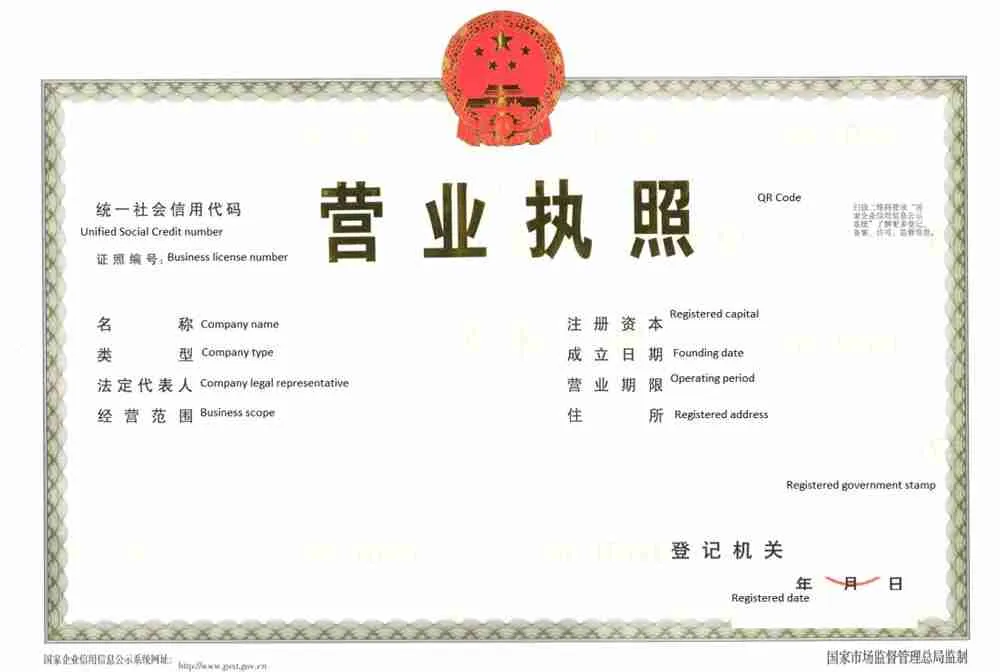
The updated new business license China introduces mandatory standardized content across all provinces. Major updates include:
- Unified Social Credit Code (USCC)
- Standardized company name formatting
- Precise business scope text
- Legal representative information
- Registered capital structure
- QR code for instant digital verification
- Digital filing trace number for cross-system checks
Foreign companies benefit from the uniformity because licensing, banking, and tax onboarding become smoother across different cities and free trade zones.
Unified Social Credit Code: The Core Identifier for Every Company
The new business license China emphasizes the Unified Social Credit Code (USCC), an 18-digit identifier used across tax, banking, customs, HR, and regulatory filings. This code replaces older registration formats and acts as the company’s universal digital identity.
USCC is essential for:
- Opening RMB and foreign-currency bank accounts
- Issuing VAT fapiao (tax invoices)
- Registering with customs for import/export
- Signing labor contracts and social insurance filings
- Participating in government procurement
The updated system parallels global business registration trends documented by the OECD regulatory efficiency guidelines, which encourage unified enterprise identification.
Why Business Scope Matters More Under the New License
The new business license China makes business scope wording more prominent and more closely tied to compliance obligations. Authorities now expect scopes to follow standardized terms aligned with national databases.
Business scope has direct effects on:
- Tax classification and VAT categories
- Whether you can issue certain fapiao types
- Which industry licenses you must apply for
- What activities banks will support (e.g., cross-border services)
- Your ability to hire foreign employees with matching job roles
To ensure business scope is aligned with required permits, many foreign investors follow proven setups described in FDI China’s China Company Setup Guide.
Digital License, QR Code System, and Online Verification
A defining feature of the new business license China is its QR code, which links directly to SAMR’s digital company registry. Anyone—including banks and customers—can scan the code to verify:
- Company legal status
- Unified Social Credit Code (USCC)
- Business scope and registered activities
- Branch information
- Administrative penalties, if any
This aligns with international e-governance practices referenced by the World Bank digital business regulation reports, promoting transparency in corporate operations.
SAMR Procedures for Issuing or Renewing the License
All business licenses in China—new or renewed—are issued by the State Administration for Market Regulation (SAMR). Under the new framework, documentation must exactly match national formats, including consistent legal representative data, company address, and capital structure.
Typical issuance requirements include:
- Articles of association
- Lease agreement and property certificate
- Identification of shareholders and legal representative
- Business scope wording consistent with industry codes
- Capital details (registered capital, paid-in commitments)
SAMR’s digital transformation is consistent with policy modernization noted in UNCTAD’s enterprise digitalization insights.
How Banks, Tax Bureaus, and Customs Use the New License
The new business license China plays a central role in cross-agency compliance. Institutions rely on it as a single source of truth:
- Banks: verify authority, update specimen signatures, open foreign-currency accounts
- Tax bureau: validates VAT capability and industry tax rate classification
- Customs: checks USCC for import/export registration
- HR/social insurance bureau: confirms employer status
The unified license improves cross-agency coordination and reduces errors in company identification.
Common Reasons Applications Get Rejected
Foreign companies frequently experience delays because of mismatches or outdated supporting documents. Common rejection reasons under the new business license China system include:
- Inconsistent addresses between lease and application
- Incorrect or non-standard business scope terminology
- Mismatched legal representative identity credential
- Invalid or outdated capital commitment structure
- Missing Chinese translations for foreign documents
Proactively aligning internal information prevents costly resubmissions.
How to Update or Modify the New Business License
If a company changes its registered address, business scope, shareholder structure, legal representative, or capital details, it must update the new business license China. These changes must be filed promptly with SAMR and then synchronized across tax, banking, and other government systems.
Typical modifications include:
- Expanding or narrowing business scope
- Changing legal representative
- Updating registered address
- Increasing or reducing registered capital
- Adding a new business line requiring licensing
Once approved, the new license version replaces the old one across all public systems.
Old vs New Business License in China: Comparison Table
| Feature | Old License | New Business License China |
| Unified Social Credit Code | Often separate registration numbers | Single 18-digit code used nationwide |
| QR Code | Not standardized | Mandatory; links to official SAMR registry |
| Business Scope Format | Varied wording across cities | Standardized phrases aligned with national guidelines |
| Digital Verification | Limited | Instant online verification for banks and partners |
| Cross-agency Use | Fragmented records | Integrated across tax, customs, HR, banking |
| License Layout | Multiple local variations | Uniform national layout |
Practical Checklist: What Foreign Companies Should Verify
- Does your Unified Social Credit Code appear correctly?
- Is your business scope aligned with your actual activities?
- Does your address match the lease, sublease, and tax registration?
- Are translations between English and Chinese consistent?
- Is your QR code scannable and linked to official SAMR data?
- Have you updated banks, tax bureaus, and customs after changes?
FDI Insight: How the New Business License Affects Market Entry
The new business license China signals China’s shift toward enhanced transparency, digital supervision, and unified corporate identity. For foreign investors, this means:
- Easier bank onboarding due to standardized license formats
- Smoother tax registration and VAT category alignment
- Better documentation consistency across provinces
- Reduced risk of mismatched corporate information
- Faster onboarding with suppliers, marketplaces, and platforms
The new framework works best when paired with a structured registration plan. Many foreign entrants choose to follow guidance like FDI China’s China Company Setup Guide to ensure their license, business scope, and approval documents align with market-entry timelines.
Conclusion: Why the New License Matters
The new business license China brings clarity, efficiency, and digital transparency to China’s corporate governance system. By understanding the updated fields, QR code verification, business scope standards, and renewal procedures, foreign-owned enterprises can reduce registration delays, strengthen compliance, and streamline operations across banking, tax, and customs.
With accurate documentation and proactive updates, your business license becomes a powerful enabler—not a bottleneck—for market entry and expansion in China’s rapidly evolving regulatory environment.