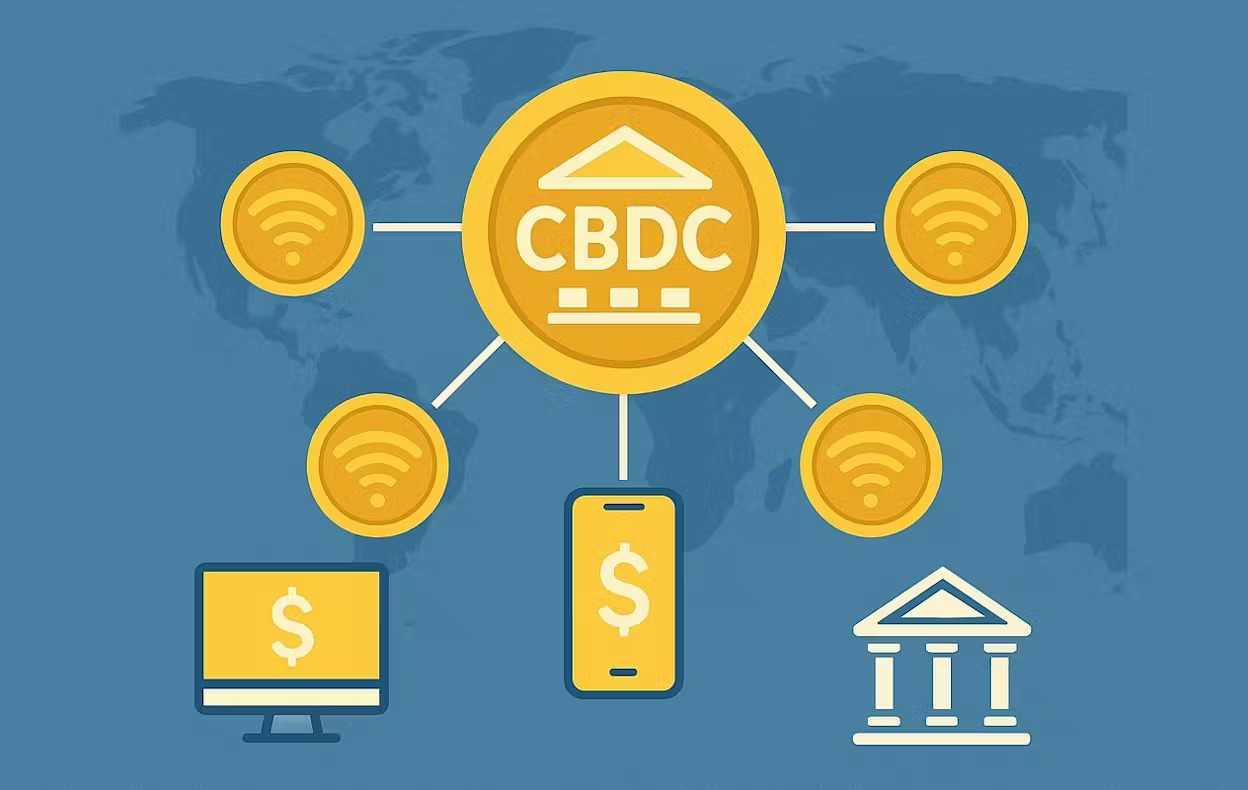
People who want to know the answer should think about how we use things, like center bank credit cards, online payments and QR codes. These things are of like digital money already. We use things to make the payment happen. Digital money is what we are talking about. We use technology to make it work. The digital currencies are really great because they are cheap and easy to use. This has made central banks want to make currencies that are even better. They want to make currencies or what people call “no-touch money” that can be sent in just seconds. The digital currencies have a lot of things about them and make life easier. Central banks like the idea of currencies because they are convenient. Digital currencies are the future of money and people, like them because they are fast and easy to use.
A big change like this could completely change the way countries work with money and it could also change who has power in different parts of the world. If countries like the ones in BRICS, which includes Brazil, Russia, India, China, South Africa, Egypt, Ethiopia, Indonesia, Iran and the United Arab Emirates stop relying much on the US dollar they might have more control over their own money and be less affected by problems in the global economy. This could be really good for BRICS countries and other countries too because they will have power over their own money and they will not have to worry as much about things that happen in other countries. BRICS countries will be able to make their decisions, about money and this will help them to be stronger. This would also bring some problems. For example we have to figure out how to make bank digital currencies work with the technology we have. We also need to make sure that different local currencies can work together smoothly.. We have to make sure that all the countries involved trust each other. As digital currencies change and grow they will have an impact on the world. This could lead to a financial system where countries work together but also compete with each other. This new system would be different from what we have and would affect how countries trade with each other invest in each other and make financial decisions. Digital currencies, like bank digital currencies would be a big part of this change.
Let us look at the payment systems that are changing. This is a system that uses blockchain to send messages and make payments. It is not controlled by one person or group. The goal is to connect the payment systems of countries. For example China has a system called CIPS India has SFMS Russia has SPFS and Brazil has PIX. These systems will allow people to make payments in their currency without having to go through other systems like SWIFT. The payment infrastructure is evolving to enable settlements in local currencies, which means that countries like China with CIPS and India with SFMS and Russia with SPFS and Brazil with PIX can make payments without using SWIFT systems. This is a change, in how payments are made between countries. The payment infrastructure is changing to include blockchain-based messaging and payment networks. The Bank for International Settlements is doing something called mBridge. This is what inspired our initiative. The mBridge is about Central Bank Digital Currency interoperability. It is also about automating settlements, between Central Bank Digital Currencies without needing the dollar.
We should also look at how each country’s adopting Central Bank Digital Currency and making them work together. For example each member of BRICS is working on their Central Bank Digital Currency projects. This includes the ruble, the digital yuan, the e-rupee the digital real and the digital rand. The pilots in Russia and China are really good at what they do. They are working to make these Central Bank Digital Currencies or CBDCs work with systems, like BRICS Bridge and mBridge. This will make it possible for people to send money across borders in time with these CBDCs. The goal is to make it easy to use these CBDCs for -border transactions.
The regional impact
The Central Bank Digital Currencies are helping to create ways for countries to do business with each other. This is making networks like mBridge. These networks are connecting banks in China, the United Arab Emirates, Saudi Arabia and some other countries. They are working together to share money and settle payments using their digital currencies.
This is very different, from the way of doing things with the US dollar. Of one big system we are seeing smaller groups of countries working together in their own regions. Each region has its digital system. The Central Bank Digital Currencies are making this happen. This kind of system is a problem for the United States dollar. It is losing its importance. The power is moving to countries, like China and the other BRICS nations. These countries are getting stronger because they are offering their money and systems as options. The dollar is not the choice anymore. China and the other BRICS nations are gaining power. They are becoming more important.
Bank digital currencies are changing the way countries interact with each other. This is because countries can now control their digital money. Bank digital currencies are really important for countries that want to be in charge of their own money. Countries are using bank digital currencies to show that they are independent and can make their own decisions about money. Bank digital currencies are a big deal for countries that want to be strong and, in control of their own economy.
Bank digital currencies are changing the way countries work together. This is because countries can now have control over their digital money. When central banks make their digital currencies they get to decide what happens with the money in their country. They do not have to rely on companies to help people send and receive money. They also do not have to use the US dollar much as they used to. This means they are not as dependent on systems like SWIFT. Bank digital currencies are giving countries more power, over their own money. The power of a country to make its own decisions extends to systems that help people buy and sell things across borders like Chinas money. This digital money works with systems, such as the BIS’ mBridge. It makes it faster and cheaper for people to pay each other in their money. It also makes the middlemen, who are often tied to banks less important.
Because of this countries that are part of a group, like the Belt and Road Initiative or the Regional Comprehensive Economic Partnership can make their economic decisions. They can also trade more with each other. Have more influence in their region. This is creating a financial system where many countries have power, not just a few. The digital yuan and systems like the BIS’ mBridge are helping to make this happen. Countries can now settle transactions in their money, which is faster and cheaper. This is good for countries like China and its partners, in the Belt and Road Initiative and the Regional Comprehensive Economic Partnership.
This change is also bringing in ways for countries to influence each other. The shift is introducing geopolitical levers that will affect how the shift and these new geopolitical levers interact with the world.
Central Bank Digital Currencies make it easier for countries to get around sanctions and give the countries that issue them power. For example China is promoting its money, the e-CNY in countries that are part of the Belt and Road project. This gives these countries a way to make transactions without using the US dollar.
The United States is moving slowly on creating a dollar. In fact President Donald Trump even stopped the idea of a dollar, with an executive order. Because of this the United States is losing the chance to set the standards for money globally. Now Europe and China are the ones making the rules. Central Bank Digital Currencies are becoming very important. The United States is falling behind.
Central Bank Digital Currencies are being used as tools to get what countries want from each other in the world. This is a deal because Central Bank Digital Currencies are changing the way countries interact with each other.
Central Bank Digital Currencies are really important
Countries that issue their digital money like Central Bank Digital Currencies get to be more in control of their own economy. They also get say in how things are done. This is because they can make their rules for how digital money works and they can work with other countries to make agreements. This will help shape how countries trade with each other in the future.
When it comes to moving money across borders things are a lot cheaper and faster. For example fees are a lot lower between 0.1 and 0.3 percent. This is compared to the way of moving money, which is called SWIFT and that costs between 0.3 and 0.5 percent. Also with Central Bank Digital Currencies money can be moved in time or on the same day.
Central Bank Digital Currencies are already being used a lot for trade between countries. For example when China and Russia trade, with each other they usually do not use US dollars. In fact 90 percent of the time they use their own currencies. This shows that countries are already starting to use their money for trade and not just relying on the US dollar. Will the BRICS countries fuel this trend? We do not know yet. The BRICS countries are looking at a currency that all the BRICS countries can use, like a token that is a mix of all their currencies called something like the “R5” or a currency that is linked to the value of gold.. There are still a lot of problems to solve like getting all the BRICS countries to agree on money matters and rules and getting their economic policies to match, which is not easy and they also need to agree on things politically which is a big challenge, for the BRICS countries.
Geopolitical implications and strategic measures
The BRICS countries are trying to use their money and a new kind of money called CBDC for trade. This could make the US dollar less important for paying for things around the world. It could also mean that countries do not have to use the US dollar much which would make them safer from sanctions.
The US dollar is still widely used and easily available which is a big advantage. This might slow down the BRICS countries efforts to make their own money more important, in the term. The BRICS countries and the US dollar are going to be affected by this the BRICS countries and the US dollar will see some changes.
Central Bank Digital Currencies give countries like China and Russia the power to avoid being watched and to get around sanctions by doing business outside of systems that the United States controls. China is using its money, the digital yuan in a smart way to trade with countries that are still growing through a big project called the Belt and Road Initiative. This helps China have control over money and makes countries less dependent on the United States dollar. All of this is making Central Bank Digital Currencies, like the digital yuan, a part of a fight between countries, which is often called a “digital currency cold war” and it is making relations, between countries more tense. Central Bank Digital Currencies are changing the way countries do business. This is why the digital currency cold war is a big deal.
Western powers are trying to stay in charge of money by making dollar-backed stablecoins and digital-dollar initiatives stronger. They want to keep controlling the system.. It seems like the world is moving towards a different system where many countries have their own digital money. In this system regional alliances that use digital money from central banks, which are called Central Bank Digital Currencies or CBDCs will become very important. Western powers and digital-dollar initiatives are still trying to be in charge. The movement is towards a system where many countries have a say. This means that regional CBDC alliances and digital-dollar initiatives will be critical, in the digital order.
So central banks around the world are really paying attention to working together and making sure digital currencies can work with each other. The decision to make a currency is still up to each country but more and more people think that being able to use digital currencies across borders and having the same rules everywhere is very important for digital payments to work well.
For example things like Project mBridge and Project Agorá are happening, where many central banks and companies are working together to see how digital currencies made by banks can help with payments between countries. Central banks are looking at currencies and how they can make cross border payments easier. Digital currencies, from banks are what these projects are focusing on. The goal is to deal with problems like being, in time zones having different laws and using different computer systems. This will help make the global financial system more connected and work better. The global financial system needs to be more connected and efficient.
When we talk about money and technology it is not about computers and machines being able to work together. Future plans will also focus on working to make rules and policies that deal with big issues like keeping peoples information private protecting against cyber attacks and keeping the money system stable. The people in charge of money in countries are talking to each other and working together to learn more about these things. They are getting help from international groups like the Bank for International Settlements and the International Monetary Fund. These groups are helping them understand why different countries want to use Central Bank Digital Currencies or CBDC for short. Some countries want to use CBDC to make it easier for people to pay for things and to help people who do not have access to banks. Other countries want to use CBDC to make sure they are in control of their money. Central Bank Digital Currencies are a deal for countries that are already doing well and, for countries that are still growing. The ongoing dialog and joint efforts are shaping a future in which regional digital-currency responses are not isolated but rather part of a broader, globally coordinated effort to navigate the evolving digital monetary order.
